 Altitude
Above the Treeline
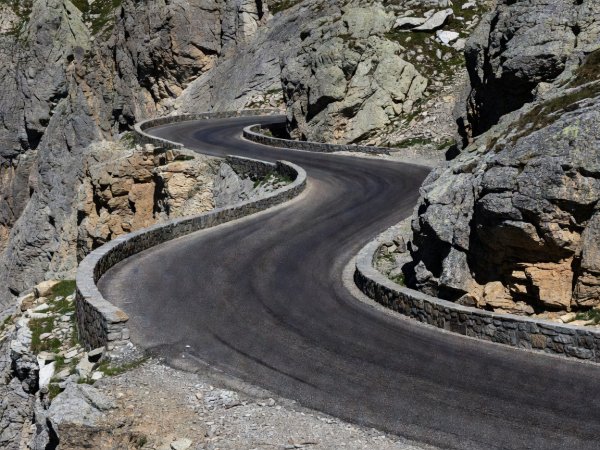
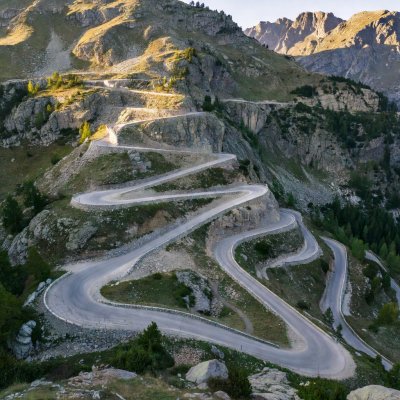
Stelvio, Grossglockner, and Rohtang. Hairpin climbing techniques, carburetor fueling changes, clutch wear on 14% gradients, and hypothermia hazards.
Examine passesA postcard curve invites admiration, but the motorcycle measures tarmac by radius, friction coefficient, temperature drift, and empty space below the pegs.
We study mountain corridors, sea-swept cliff edges, and high-altitude river crossings across the planet. Our journals do not rank danger as a trophy; they dissect how geography and physics alter rider responsibility.
The visual splendour of world-famous roads frequently masks their fundamental hostility to two wheels. When a highway engineer carves tarmac into the western edge of the Andes, across the Karakoram massif, or along the North Atlantic archipelago, the mandate is logistical connection, not two-wheeled leisure.
Motorcyclists are disproportionately vulnerable to this architectural compromise. In a car, an unbanked reverse-camber turn means body roll; on an adventure motorcycle carrying fifty kilograms of luggage, it means sudden front-tire scrub while looking directly into a six-hundred-metre gorge.
"The photograph remembers the turquoise water and the golden granite; the throttle hand remembers the black diesel slick lying cold in the apex." — Field Dispatch, Alpine Sectors
When we review routes like Norway's Trollstigen or India's Rohtang Pass, we must separate the romanticism of the panorama from the unyielding physical parameters: asphalt temperature drops, brake rotor heat fade, erratic crosswinds, and sudden rockfall that cannot be swerved around when oncoming lorry traffic crosses the centreline.
Scenery is incidental; traction is absolute. Four structural hazards govern high-risk scenic touring.
| Hazard Pattern | Characteristic Geography | Physical Mechanism | Riding Consequence |
|---|---|---|---|
| Alpine Thermal Inversion | Passes above 2,000m (Stelvio, Grossglockner) | Sub-surface ground frost weeping across sunny switchbacks | Zero friction on early-morning entry points with warm tire compounds |
| Salt Spray & Sea Fog | Atlantic Ocean Road, Chapman's Peak | Fine saline film coating aggregate, reducing micro-texture grip | Progressive loss of braking coefficient without visible wet pooling |
| Glacial Silt & Scree Spill | Karakoram Highway, Rohtang corridor | Meltwater channels flushing talcum-fine rock dust onto tarmac | Instant front-wheel wash-out if braking while committed to lean |
| Unlined Single-Bore Rock Tunnels | Guoliang Tunnel, Gorges du Verdon | Abrupt shift from bright sun to wet limestone with no artificial lighting | Temporary blindness accompanied by standing puddles and jagged lateral walls |
Explore our permanent surveys categorized by topography and mechanical demands.
Altitude
Stelvio, Grossglockner, and Rohtang. Hairpin climbing techniques, carburetor fueling changes, clutch wear on 14% gradients, and hypothermia hazards.
Examine passes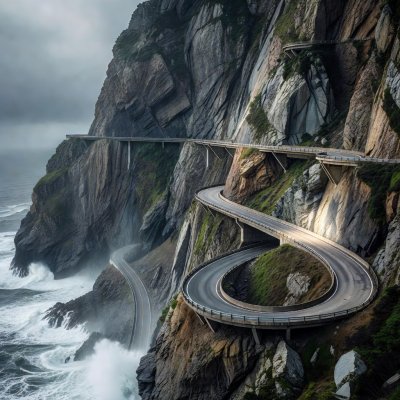 Maritime
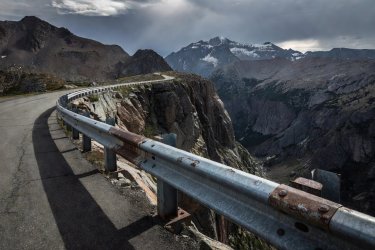
The Atlantic Ocean Road, Chapman's Peak, and Amalfi shelf tracks. Crosswind turbulence, marine salt mist, blind bus interactions, and unprotected drops.
Examine cliffs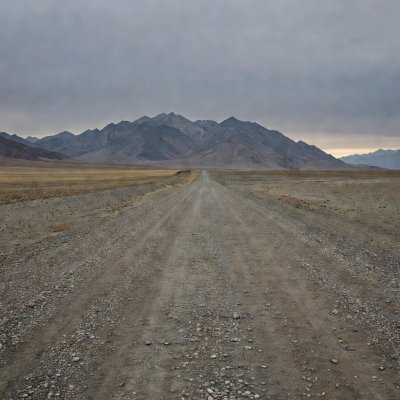 Isolation
The Karakoram Highway, Dalton Highway, and North Yungas. Autonomous range calculations, tire repair under freezing winds, and unassisted recovery protocol.
Examine wilderness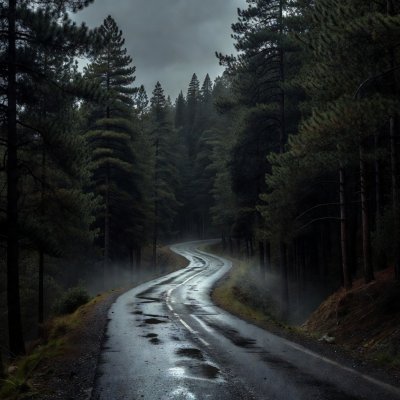 Dynamics
Sightline geometry, centrifugal loading, unseen diesel stains, wandering livestock, and braking distance expansion on descending grades.
Examine risks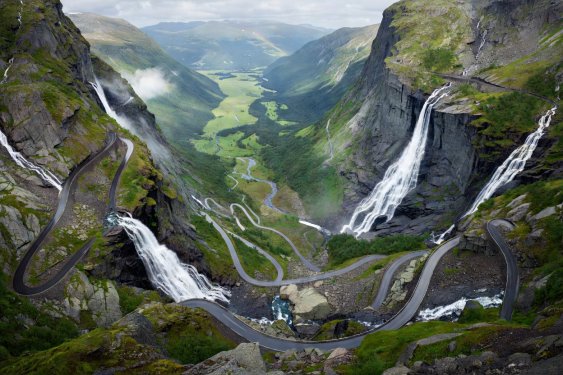
Trollstigen, Norway: 9 percent incline combined with natural spray from the Stigfossen waterfall.
Consider Turn 7 on Norway's Trollstigen. It sits at an elevation where warm maritime fog meets descending Arctic air masses. The road surface is framed by stone cairns instead of modern crash barriers.
Here, the touring rider must balance three simultaneous forces: the damp stone bridge over Stigfossen waterfall which drops granite mist across the road, touring motorhomes whose mirrors overhang the median, and a camber that falls away toward the valley floor. Smoothness is not an aesthetic choice; it is the only mechanism that keeps the front contact patch loaded.
Brief answers to fundamental inquiries about high-demand route preparation.
Weight transfer naturally loads the front fork under downhill deceleration, reducing suspension travel available to absorb road imperfections while unweighting the rear tire. If a rider brakes late into a descending turn, the bike resists turning (stands up) and risks crossing the centreline into opposing traffic.
Modern electronic fuel injection (EFI) adjusts the air-fuel mixture based on barometric air pressure sensors, though power is still reduced by roughly 3% per 1,000 feet of climb due to thin air. Carbureted machines run excessively rich, causing fouled spark plugs, hesitation, and engine stalls on high passes like Khardung La or Grossglockner.
Brake fluid and clutch slave systems. Continuous dragging of the rear brake on steep descents boils hydraulic fluid, resulting in total pedal fade, while aggressive low-gear clutch slipping in uphill hairpins overheats clutch plates.
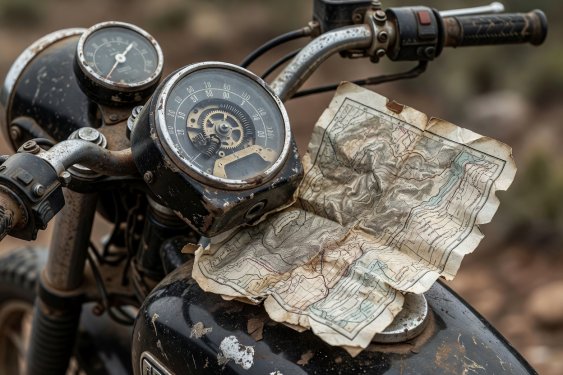
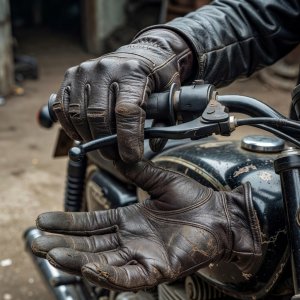
Field gear and navigation apparatus from our alpine and gravel documentation journeys.
Nordjoltsprigg is written for riders who view motorcycling as a discipline of observation rather than an exercise in adrenaline. We accept no tourism board subsidies, hotel partnerships, or tire manufacturer sponsorships.
Our sole goal is to preserve clear, sober documentation of how geography, weather, and civil engineering intersect on the planet's most formidable roadways.
We use cookies Essential cookies keep this site working. Optional ones help us see what is useful. You can change your choice at any time. Read more